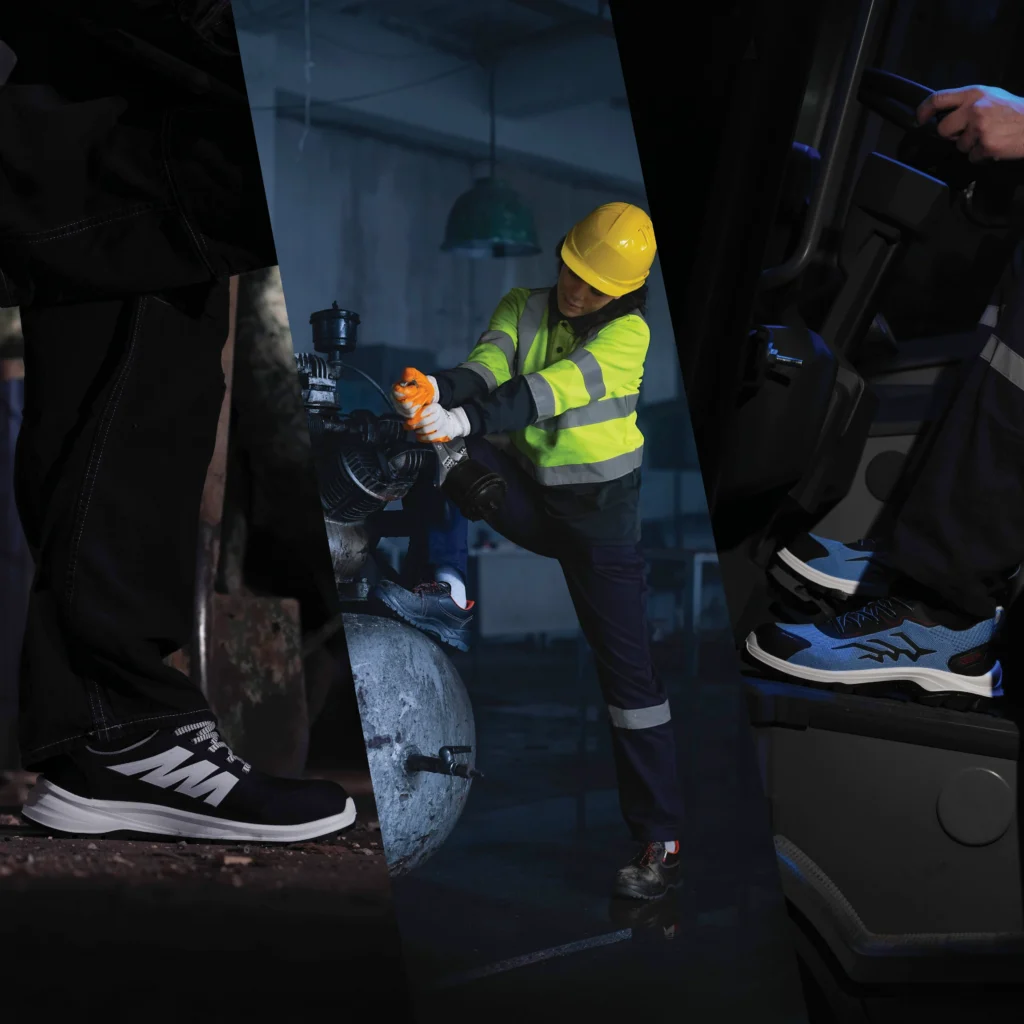
What Are Safety Shoes and When Are They Mandatory?
Safety shoes are footwear that complies with the latest ISO standard, EN ISO 20345:2022. This standard specifies requirements for toe protection, slip resistance and resistance to penetration, among other safety features. Safety shoes certified under this standard must have a protective toe cap, providing protection against falling objects, sharp objects and impacts.
Safety shoes provide protection against the following hazards:
Impacts, sharp objects and falling objects: thanks to a protective toe cap.
Sharp objects, such as nails and metal fragments: thanks to a penetration-resistant midsole.
Slippery surfaces: through slip-resistant soles that provide better grip and stability.
Electrical hazards: through antistatic properties that help reduce the risk of electrostatic discharge.
When a workplace risk assessment (RI&E) identifies a risk of foot injuries, the employer must provide appropriate safety shoes free of charge and make their use mandatory. In the construction industry, safety shoes are explicitly required by law.
Safety Shoes Complying with Current Safety Standards
Our range includes only safety shoes that have been tested and certified in accordance with the strict EN ISO 20344 and EN ISO 20345 standards. These European standards specify the basic requirements and specific safety criteria that footwear must meet for professional use.
The EN ISO 20344 standard covers the general requirements and test methods for safety footwear. This includes assessing the quality of materials, such as the leather used in safety shoes. Compliance with this standard is an important indication that footwear has been tested for reliability and suitability for professional use.
EN ISO 20345: The S-Classifications
In addition to EN ISO 20344, the EN ISO 20345 standard (CE EN 345) is essential when selecting safety footwear. This standard specifies the safety requirements for different protection categories, known as S-classifications.
The letter S stands for “Safety” and indicates the level of protection provided against various workplace hazards.
Examples include:
S1: Basic safety protection.
S3: Additional protection, including water resistance and a penetration-resistant midsole.
Although S3 safety shoes are a popular choice because they offer a high level of protection under the EN ISO 20345:2011 standard, they are not necessarily the best option for every working environment. The correct safety classification depends on the specific working conditions and potential hazards.
The EN ISO 20345:2011 standard is being replaced by EN ISO 20345:2022. This updated standard specifies the basic and additional requirements for safety footwear, including protection against mechanical and thermal hazards, slip resistance, ergonomics and compatibility with orthopaedic insoles.
Below, we provide an overview of the various safety classifications for safety footwear, including the familiar S-classifications and the additional markings introduced under the updated standard, which came into effect on 30 March 2023.
Suitable for which safety standards?
SB norm
S1 norm*
S2 norm
S3 norm**
S7 norm
Agricultural sector
X
X
YES
YES
YES
Automotive sector
Yes
YES
YES
YES
YES
Construction sector
X
X
X
YES
YES
Chemische industrie
X
YES
YES
YES
YES
Electronics sector
X
X
X
X
X
Pharmaceutical industry
YES
YES
YES
YES
YES
Logistics
YES
YES
YES
YES
YES
Metal sector
X
X
X
YES
YES
Security sector
YES
YES
YES
YES
YES
Hospitality and tourism
YES
YES
YES
YES
YES
Health and social care sector
YES
YES
YES
YES
YES
Food industry
YES
YES
YES
YES
YES
What Are the Key Features of Safety Shoes?
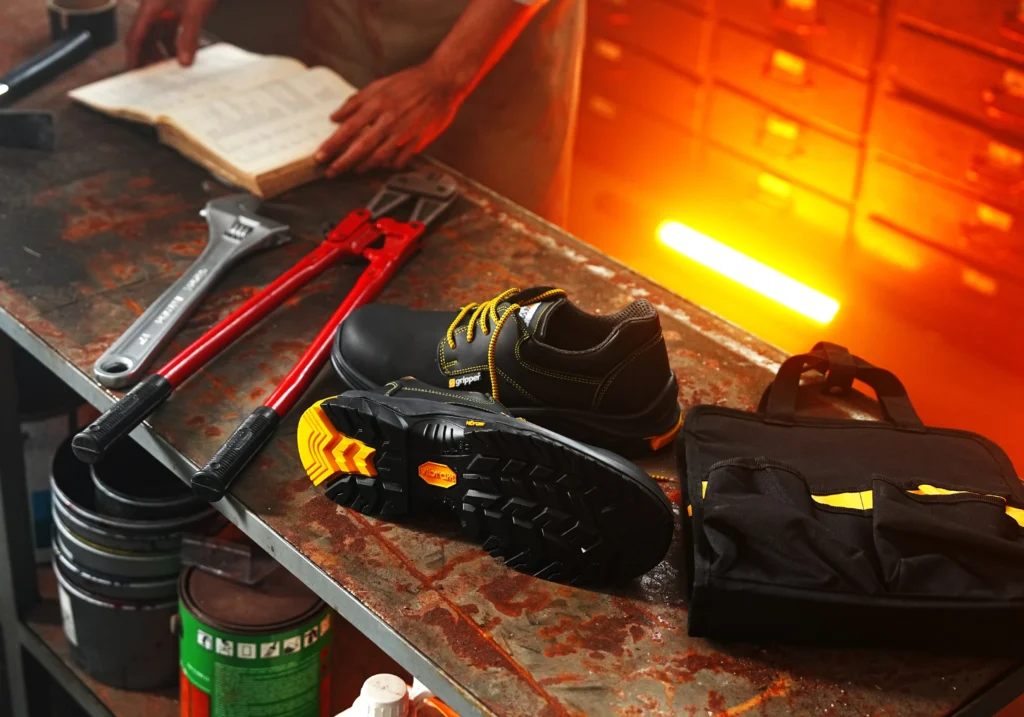
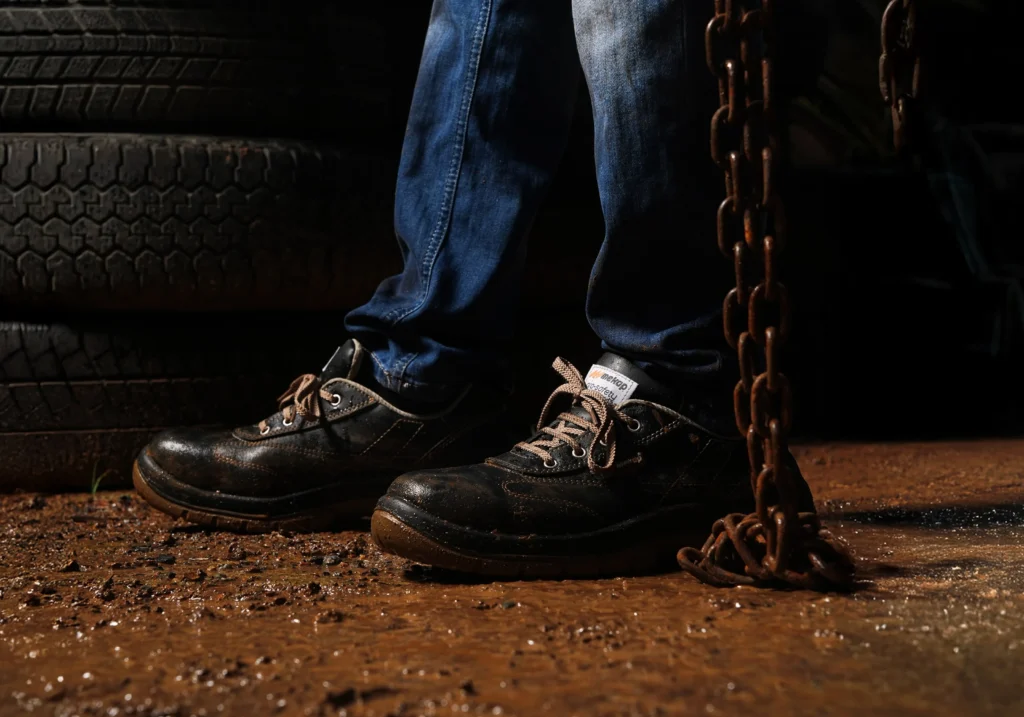
All safety shoes have at least a protective toe cap and an energy-absorbing heel. For work in the metal industry or food production, safety shoes with an S2 classification are generally required. In the construction industry, footwear with at least an S3 classification is commonly required. These shoes also feature a penetration-resistant midsole to prevent sharp objects, such as glass and nails, from penetrating the sole.

What Should You Look for When Buying Safety Shoes?
When ordering safety shoes, it is important to identify the potential hazards in your workplace, such as falling objects, sharp materials, moisture and electrical hazards. Your safety shoes should provide the appropriate protection while remaining comfortable throughout the working day.
The following are the most important factors to consider:
Safety classification: Choose a safety classification that matches the risks in your workplace. Also, check that the shoes comply with the latest European standard, EN ISO 20345.
Required features: Consider features such as waterproofing if you frequently work outdoors, or ESD (Electrostatic Discharge) protection if you work in environments where electrostatic discharge is a concern.
Slip-resistant soles: Choose shoes with slip-resistant soles and the appropriate SR classification to reduce the risk of slipping.
Comfort and fit: Safety shoes should fit comfortably to help prevent foot problems. Use the size guide on our website to find the right size.
Material: Safety shoes are available in a variety of materials. Leather and nubuck are durable materials that offer excellent protection.
Microfibre safety shoes are considerably lighter but may be less resistant to certain chemicals. Textile footwear is also lightweight and breathable, making it particularly comfortable in warm weather. However, it is generally less suitable for wet working conditions.
Finally, waterproof membranes and PU coatings are recommended if you frequently work in contact with water, mud and cleaning agents.
Choose the Right Safety Shoes for Your Profession
Choosing the right, comfortable safety shoes for your profession and daily activities is essential. Whether you work in the metal industry, food production, construction or another sector, we offer suitable safety footwear from more than 30 different brands, including the well-known Mekap brand.
For example, S2 safety shoes are generally the minimum requirement for certain activities in the metal industry and food production. In construction, S3 safety shoes are commonly required. Construction footwear often provides additional protection and is specifically designed to meet the demanding requirements of the construction industry.
These safety shoes not only protect against sharp objects but are also designed to withstand water and other external influences.
Do My Safety Shoes Need to Have a Protective Toe Cap?
In many industries, it is essential that safety shoes have a protective toe cap. Whether you work in an industrial environment, construction or another demanding workplace, safety shoes with a protective toe cap provide essential protection without compromising comfort.
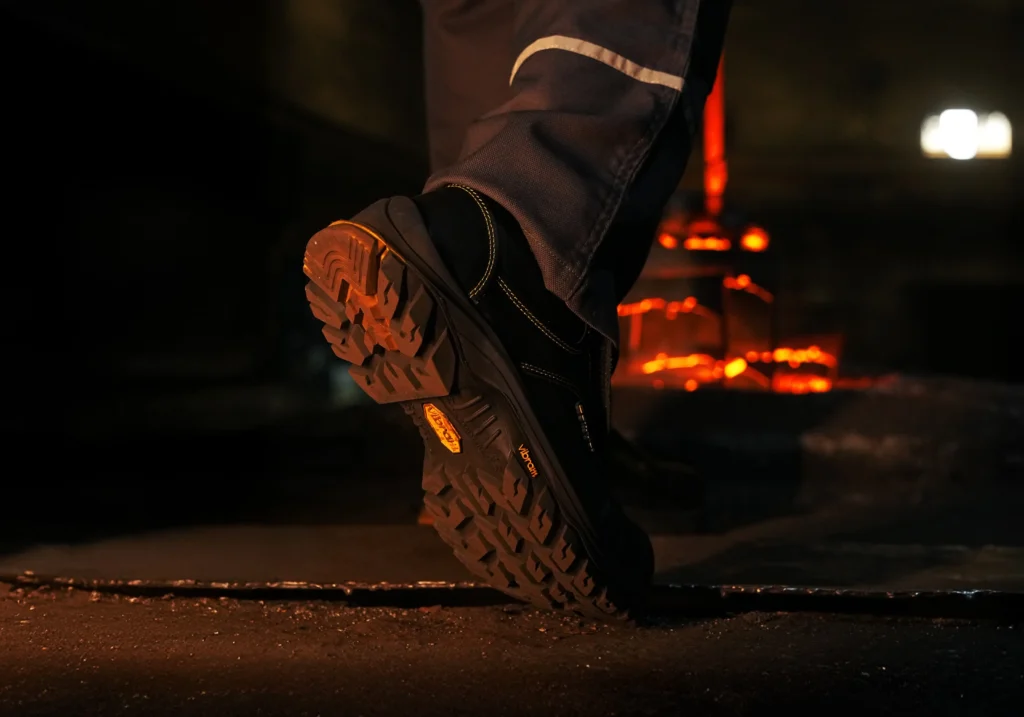
Today, many traditional safety shoes are equipped with composite toe caps, which offer several important advantages. Compared with steel toe caps, composite toe caps are lighter, making the shoes more comfortable to wear for extended periods.
Their lighter weight helps reduce foot fatigue and allows you to move freely without unnecessary strain.
Choosing Safety Shoes with the Right Fit
Finding the right fit is easy:
Select your preferred product.
Enter your shoe size. If you are unsure about your size, click on the size guide.
Fill in as much information as possible, including the brand, model and your weight.
Based on the information provided, you will immediately receive a recommendation for the shoe size most likely to fit you.
Would you like to be absolutely sure that you have selected the correct size? Use our size guide for additional assistance.
How to Maintain Your Safety Shoes
In addition to wearing the correct safety shoes, proper maintenance is essential to keep them in good condition and extend their lifespan.
After work, remove dirt and mud with a damp cloth. Leather safety shoes are best cleaned with lukewarm water and mild soap and should be treated with leather cream or leather grease. Nubuck shoes should be maintained with a suitable care spray rather than grease.
We also recommend allowing your safety shoes to dry at room temperature. Do not place them near a radiator or use a hairdryer or direct sunlight to speed up the drying process, as excessive heat can dry out the materials and damage the adhesives.
We also advise against washing safety shoes in a washing machine or using aggressive cleaning products or bleach. These can damage the materials and may even compromise the shoe’s safety certification.
Buy Safety Shoes from Anatolian Pearls BV
Anatolian Pearls BV offers a wide range of high-quality safety shoes. Our footwear is certified in accordance with the latest ISO standard, EN ISO 20345:2022.

Order your safety shoes from Anatolian Pearls BV and benefit from our extensive range, excellent quality and competitive prices. We combine reliable protection with outstanding value for money.
Frequently Asked Questions
What Is the Difference Between Work Shoes and Safety Shoes?
The main difference between work shoes and safety shoes is the level of protection they provide.
Work shoes do not necessarily have protective features such as a safety toe cap. Safety shoes, on the other hand, fall under the EN ISO 20345 standard and are equipped with a protective toe cap. Depending on their classification, they may also feature slip-resistant soles and penetration-resistant midsoles.
For workplaces where hazards are present, you should always choose certified safety shoes that provide the appropriate level of protection.