Natuurlijk. Hieronder staat de Engelse vertaling in een professionele, technische stijl die geschikt is voor een veiligheidsschoenenhandleiding.
Antistatic Footwear
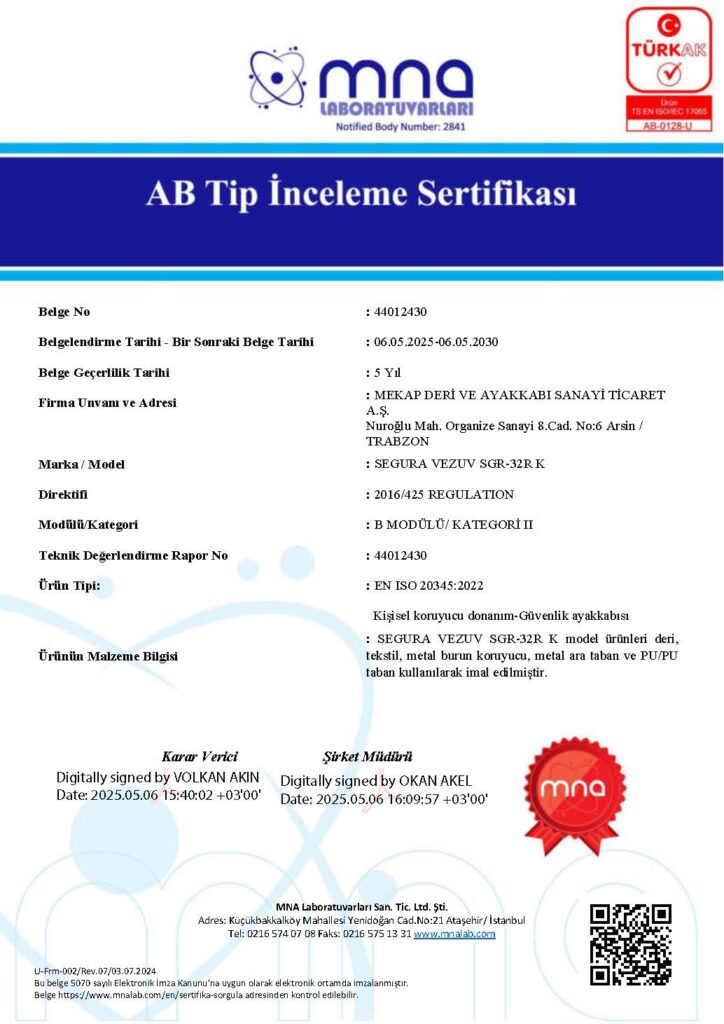
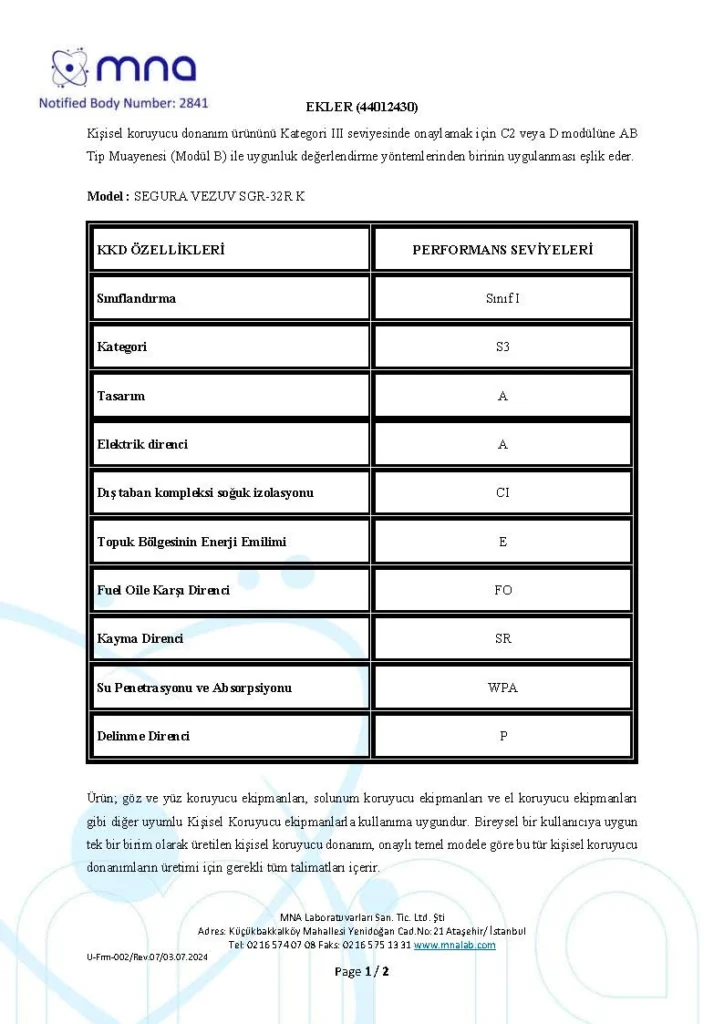
Antistatic footwear should be used where it is necessary to minimise the accumulation of electrostatic charges by dissipating electrostatic charges, thereby avoiding, for example, the risk of ignition of flammable materials and vapours, and where the risk of electric shock from mains-voltage equipment cannot be completely eliminated in the workplace.
Antistatic footwear creates electrical resistance between the foot and the ground, but may not provide complete protection.
Antistatic footwear is not suitable for work on live electrical installations.
However, it is important to emphasise that antistatic footwear, because it only creates resistance between the foot and the ground, does not provide adequate protection against electric shock caused by static discharge.
If the risk of electric shock caused by static discharge cannot be completely eliminated, additional measures are required to prevent this risk. Such measures, together with the additional tests described below, should form an integral part of the occupational accident prevention programme.
Antistatic footwear does not provide protection against electric shocks from alternating current (AC) or direct current (DC).
Where there is any risk of exposure to AC or DC voltage, electrically insulating footwear should be worn to protect against serious injury.
The electrical resistance of antistatic footwear can change significantly due to stretching, contamination or moisture. The footwear may not function properly when worn in wet conditions.
If footwear must be worn in contaminated conditions, the wearer should always check the antistatic properties of the footwear before entering a hazardous area.
Class I footwear can absorb moisture and become conductive if worn for extended periods in damp or wet conditions.
Class II footwear is resistant to damp and wet conditions and should be used where there is a risk of exposure to such conditions.
If footwear is worn under conditions where the sole material becomes contaminated, the wearer should always check the antistatic properties of the footwear before entering a hazardous area.
When antistatic footwear is used, the resistance of the floor must be such that it does not compromise the protection provided by the footwear.
It is recommended to use antistatic socks.
Therefore, it is necessary to ensure that the combination of the footwear wearer and the surrounding environment is capable of performing the intended function, namely the dissipation of electrostatic charges, and that it provides an appropriate level of protection throughout the service life of the footwear.
For this reason, it is recommended that the user carry out an internal electrical resistance test, which should be repeated regularly and frequently.